
Uncover Your Money Story: A Quick Exercise
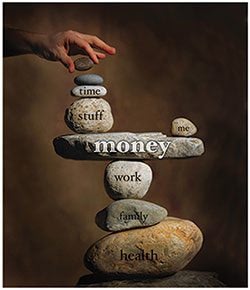
The following exercise has helped my clients clarify their relationship with money. Now it’s your turn. Take a note pad and 5 minutes to write down your answers to the questions below:
- Write down the first 8 to 10 words that come to mind when you think of the word “money.”
- Underline all of the words you identified that carry a negative connotation.
- Write down three things you are proud of in terms of your financial life.
- Write down three things you feel badly about when it comes to your finances.
- Identify which list was easiest for you to complete.
- Write down your most joyful experience involving finances.
- Write down your most painful experience involving finances.
- Identify which memory was easiest for you to recall.
- Now take a ten or twenty dollar bill and look at it. Write down the answer to the following question: What has this ever done to hurt you?
Write down the answer to the following question: What has this ever done to hurt you? Email your answers to marina@marinaedelman.com
as a starting point for our conversation. Please indicate how you prefer to be contacted and when.
Take the First Step Towards Change
Many clients choose to address stress through couples therapy, where we work directly on the relational patterns driving emotional overload.
Contact Marina Edelman, LMFT, today for a confidential consultation.
Learn More About Marina Edelman’s Services
You can also find more information on her Psychology Today profile: Marina Edelman – Psychology Today. Or explore resources on the AEDP Institute website: Marina Edelman – AEDP Institute
FAQ
What is the "Money Story" exercise and why does it matter?
Your money story is the collection of beliefs, memories, and emotional associations around money that you absorbed — largely unconsciously — through your earliest experiences with it. Most of us never examine those associations directly, which means they continue to drive our financial behavior, our financial anxiety, and our financial relationships from the background, without our awareness or consent. This exercise is designed to bring that story into conscious view — quickly and without requiring any prior knowledge of psychology or finance. In my clinical experience, the words that come to mind in the first few seconds when you think about money are among the most honest and revealing data points available about your relationship with it. What you write down in those first moments tells you more about your financial psychology than hours of analysis could.
Why do I need to write down my answers about money — can't I just think through them?
Writing matters here in a way that thinking alone does not — and this is not incidental to the exercise. When we think about emotionally loaded topics, the mind tends to organize, edit, and protect. Writing bypasses that editorial process and produces something rawer and more honest. It also creates a record that you can look at from the outside — which is fundamentally different from holding the same thoughts inside your head. Many clients tell me that seeing their money words written down for the first time is genuinely surprising — that the associations they didn’t know they carried become visible in a way they never were before. That visibility is the beginning of genuine change.
What does it mean if most of the words I write down are negative?
It means you are not alone — and it means the exercise is working exactly as intended. The majority of people who complete this exercise find that their automatic associations with money skew negative — scarcity, fear, conflict, shame, stress. That is not a character flaw or a financial failing. It is an honest reflection of what most of us absorbed around money in childhood, in our families, and in a culture that rarely models a healthy, grounded relationship with finances. Identifying those negative associations is not the endpoint — it is the starting point. Understanding where they came from, how they are currently shaping your behavior, and what a different relationship with money could look like is precisely the work we do together from there.
What is the significance of the ten or twenty dollar bill money at the end of the exercise?
That final question — what has this ever done to hurt you — is one of the most important in the entire exercise, and it is designed to surface something specific: the degree to which the emotional weight you carry around money has been transferred onto money itself, rather than held in the experiences and relationships where it actually originated. Money is an object. It has never made a decision, expressed contempt, created scarcity, or caused shame. The pain associated with money always has a human source — a family dynamic, a formative experience, a relationship in which money was used as a tool of control or love or withholding. That distinction — between money as a neutral resource and money as an emotionally loaded symbol — is one of the most clarifying and liberating insights in financial therapy. The bill in your hand is just paper. What it means to you is your money story. And your money story is something we can change.
What happens after I email my answers — and what can I expect from the complimentary session?
Once you submit your responses, I will reach out to schedule a complimentary phone session at a time that works for you. That conversation is not a sales call and it is not a formal intake — it is a genuine first conversation, grounded in what you shared, about your relationship with money and what you are hoping to understand or change. I will have read your answers carefully before we speak, which means we can begin somewhere real rather than starting from scratch. The goal of that session is simply to see whether working together feels like the right fit — for you, and for what you are carrying. There is no commitment required and no pressure to continue beyond that conversation if it doesn’t feel right. Reach out when you are ready. I am here when you are.
Take the first step toward healing and connection, schedule your consultation today.
Not sure where to start? Let’s talk.