
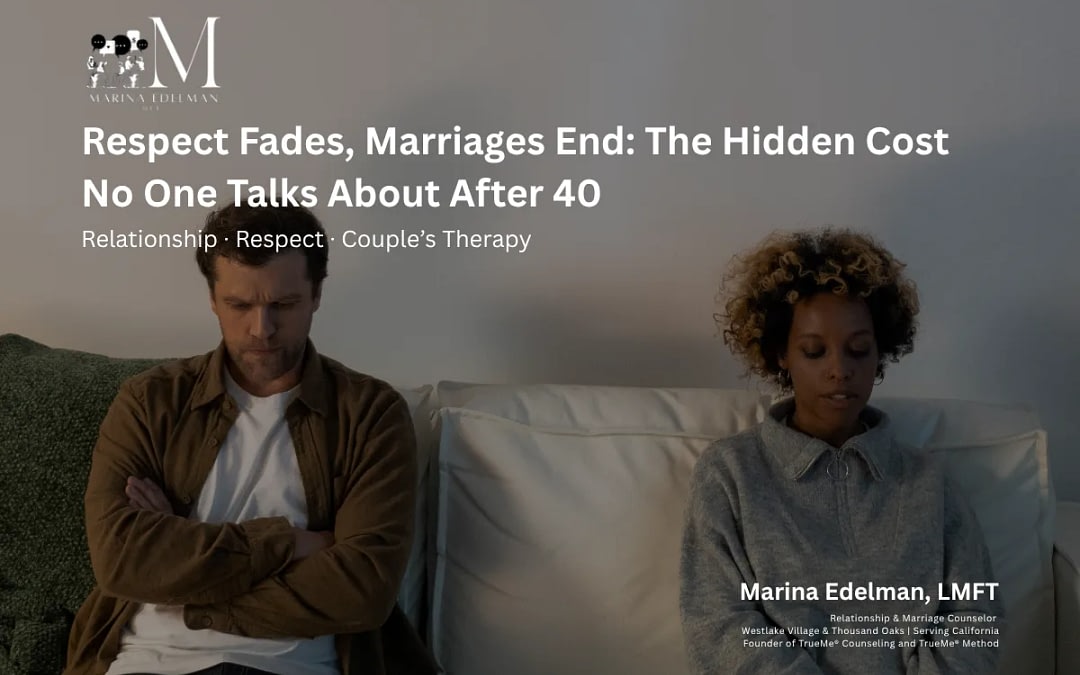
Most Marriages After 40 Don’t End Because Love Disappeared—They End Because Respect Slowly Faded
Respect —not love— is often the first thing to disappear in struggling marriages.
Many people assume marriages end because couples simply “fall out of love.” But after more than 20 years of working with couples and over 30 years of marriage myself, I’ve found that’s rarely the whole story.
More often, relationships begin to unravel when one partner no longer feels respected, appreciated, or emotionally safe.
Love may still be there.
Commitment may still be there.
But when everyday interactions are filled with criticism, dismissal, sarcasm, or contempt, emotional connection gradually begins to fade.
The encouraging news is that respect isn’t built through grand romantic gestures or expensive gifts. As a marriage and couples therapist, I’ve observed certain patterns among couples who maintain vibrant, enduring relationships. It’s reflected in the small, everyday moments—how partners speak to each other, respond during conflict, show appreciation, and protect one another’s dignity.
These seemingly ordinary interactions either strengthen trust or quietly chip away at it over time.
Let’s explore five subtle forms of disrespect that can slowly weaken even the strongest long-term marriages—and what healthier relationships do differently.

Why Respect Matters More Than You Think
Respect Creates Emotional Safety
Healthy marriages aren’t built on passion alone.
They’re built on emotional safety—the confidence that your partner values your thoughts, protects your dignity, and treats you with kindness, even during conflict.
When respect disappears, partners often begin to:
- Share less about their feelings
- Avoid difficult conversations
- Become defensive
- Feel lonely within the relationship
- Lose trust over time
Respect is the foundation that allows love to thrive.
Without it, even strong relationships can begin to fracture.
1. Putting Your Partner Down in Front of Others
Public criticism can be one of the quickest ways to damage trust.
Sometimes it looks obvious:
- Mocking your partner at family gatherings
- Correcting them in front of friends
- Criticizing their decisions publicly
Other times it’s more subtle:
- Rolling your eyes while they speak
- Making dismissive comments
- Speaking to them with impatience in social settings
Even if everyone laughs, your partner may leave feeling embarrassed rather than supported.
Why It Hurts
Public humiliation sends an important message:
“You’re not safe with me.”
Over time, repeated embarrassment can create emotional distance that becomes difficult to repair.
2. Making Hurtful “Jokes” at Their Expense
When Humor Stops Being Funny
Healthy couples laugh together.
Unhealthy patterns often involve laughing at one another.
Statements like:
- “Can’t you take a joke?”
- “You’re too sensitive.”
- “I was only kidding.”
can dismiss genuine hurt.
Intent matters—but impact matters more.
If your partner consistently feels like the punchline, humor may be masking disrespect.
Ask Yourself
Would I make this same joke if I knew it genuinely hurt the person I love?
If the answer is no, it may be time to rethink the pattern.

3. Speaking Negatively About Your Partner Behind Their Back
Everyone needs trusted people to talk to during difficult times.
Seeking support is healthy.
Repeatedly criticizing, mocking, or belittling your partner to friends or family is something different.
When negative conversations become the norm, respect begins to erode both inside and outside the relationship.
A Helpful Rule
Talk about your partner as though they could hear every word.
That doesn’t mean pretending everything is perfect.
It means communicating with the same dignity and respect you would want shown to you.
4. Dismissing Their Thoughts or Feelings
Disrespect isn’t always loud.
Sometimes it’s a facial expression.
Sometimes it’s silence.
Sometimes it’s a sentence like:
- “You’re overreacting.”
- “You’re being dramatic.”
- “That’s ridiculous.”
Or behaviors such as:
- Interrupting
- Eye rolling
- Sarcasm
- Ignoring concerns
- Changing the subject
These responses communicate something powerful:
“Your experience doesn’t matter.”
The Long-Term Impact
Eventually, many partners stop sharing altogether.
Not because they no longer have feelings—but because they’ve learned those feelings won’t be received with care.
That’s when emotional intimacy begins to disappear.
5. Showing More Kindness to Strangers Than to Your Partner
This may be one of the most common relationship traps.
Many people are patient with:
- Coworkers
- Friends
- Cashiers
- Neighbors
Yet become short-tempered, dismissive, or impatient with the person they love most.
Why?
Because familiarity often lowers our awareness.
We begin assuming our partner will simply understand.
But healthy marriages aren’t built on assumptions.
They’re built on intentional kindness.
The same courtesy you naturally extend to strangers can have an even greater impact when practiced consistently at home.

How Small Moments Build—or Break—A Marriage
Rarely does a marriage fall apart becaus of one conversation.e
More often, it’s the accumulation of everyday interactions.
Small moments of:
- Appreciation
- Respect
- Curiosity
- Patience
- Encouragement
strengthen connection.
Small moments of:
- Criticism
- Contempt
- Dismissal
- Defensiveness
- Public embarrassment
gradually weaken it.
Healthy relationships aren’t perfect.
They’re intentional.
Can Respect Be Rebuilt?
Yes.
Even if unhealthy patterns have existed for years, many couples learn to rebuild respect when both partners are willing to acknowledge the problem and make consistent changes.
Rebuilding respect often involves:
Practicing Active Listening
Focus on understanding rather than preparing your response.
Repairing After Conflict
Apologize sincerely, acknowledge hurt, and take responsibility for your actions.
Speaking With Kindness
Choose words that protect your partner’s dignity, especially during disagreements.
Showing Appreciation Daily
Simple expressions of gratitude can strengthen emotional connection over time.
Seeking Professional Support
A couples therapist can help identify recurring patterns, improve communication, and create healthier ways of relating to one another.
Final Thoughts
Love doesn’t usually disappear overnight.
Respect often fades first.
The strongest marriages aren’t those without conflict—they’re the ones where both partners consistently choose kindness, protect each other’s dignity, and create emotional safety through their everyday actions.
If you recognize some of these patterns in your own relationship, don’t view them as signs of failure.
View them as an opportunity to make meaningful changes before emotional distance grows wider.
Small moments matter.
And so do the choices you make in them.
Frequently Asked Questions
1. Why do many marriages after 40 end even when love is still present?
Many marriages struggle because one or both partners stop feeling respected, emotionally safe, or valued. While love may remain, ongoing patterns of criticism, dismissal, or contempt can gradually weaken the relationship.
2. What are examples of disrespect in a marriage?
Examples include criticizing your partner in public, making hurtful jokes at their expense, dismissing their feelings, speaking negatively about them behind their back, and treating strangers with more kindness than your spouse.
3. Can a marriage recover after years of disrespect?
Yes. When both partners are willing to acknowledge unhealthy patterns, communicate openly, rebuild trust, and practice consistent respect, many relationships can improve significantly. Couples therapy can also provide valuable guidance.
4. Why is emotional safety important in a relationship?
Emotional safety allows partners to express their thoughts, feelings, and concerns without fear of ridicule, criticism, or dismissal. It fosters trust, intimacy, and healthy communication.
5. How can couples rebuild respect in their relationship?
Couples can rebuild respect by listening without interrupting, speaking kindly during disagreements, expressing appreciation regularly, repairing conflicts through sincere apologies, and seeking professional support when needed.
Ready to Build a Stronger Relationship with Respect?
Respect isn’t something that only matters during major disagreements—it’s built through the smal l, everyday interactions that help your partner feel valued, heard, and emotionally safe.
If criticism, resentment, or emotional distance have become part of your relationship, it doesn’t have to stay that way.
Whether you’re looking to improve communication, rebuild trust, or reconnect after years of feeling unheard, therapy can help you understand the patterns keeping you stuck and develop healthier ways of relating to one another.
Take the First Step
📞 Call: (818) 851-1293
📧 Email: marina@marinaedelman.com
Healthy marriages aren’t built by avoiding conflict—they’re built by choosing respect, kindness, and emotional safety every day.
