

You don't have to figure it out alone.
As a Marriage and Family Therapist with more than 20 years of experience, I help individuals, couples, and families strengthen relationships, heal from betrayal, and navigate anxiety, depression, trauma, parenting, divorce, and life transitions. Schedule a sessionPsychologist, Marriage and Family Therapist, or Clinical Counselor — Which One Do You Actually Need?
You finally decide to get help.
Then you open your laptop and start looking.
This one’s a psychologist. That one’s an LMFT. Here’s an LPCC. Somewhere in there you spot a PhD, a PsyD, and about six different ways people describe basically the same job — therapist, counselor, psychotherapist.
And somewhere around your tenth browser tab, you think: okay, but which one am I actually supposed to call?
Reasonable question. If you’re staring down a marriage that feels like it’s coming apart, an anxiety spiral you can’t talk yourself out of, the aftermath of an affair, or a kid you’re genuinely worried about — you don’t want a crash course in licensing boards before you’re allowed to ask for help.
So here’s the plain-English version.
In California, psychologists, Licensed Marriage and Family Therapists, and Licensed Professional Clinical Counselors are all qualified to sit across from you and do this work. Their paths to get there aren’t the same, and honestly, neither is what any given clinician does once they’re actually licensed and practicing.
The credential tells you something real. It just doesn’t tell you the whole picture — that comes down to the person, not just the letters.
It’s Not Just These Three, By the Way
Mental health care is a bigger tent than most people realize — psychologists, psychiatrists, marriage and family therapists, clinical counselors, clinical social workers, and a handful of other licenses all fall under it.
But if you’re specifically looking for talk therapy in California, three titles you’ll run into constantly are:
- Psychologist
- Licensed Marriage and Family Therapist (LMFT)
- Licensed Professional Clinical Counselor (LPCC)
All three can legally provide psychotherapy. Where they actually start to look different from each other is in how they got trained — and, often, what kind of work they end up gravitating toward.

What Is a Licensed Marriage and Family Therapist (LMFT)?
A Licensed Marriage and Family Therapist, usually shortened to LMFT, is a licensed mental health professional trained in psychotherapy with a particular foundation in relationships and family systems.
And no, you don’t have to be married to see one.
That’s probably one of the most confusing things about the name.
LMFTs may work with individuals, couples, families, children, and adolescents.
In California, LMFT licensure requires qualifying graduate education, examinations, and 3,000 hours of supervised professional experience completed over at least 104 weeks. California’s experience requirements include direct clinical counseling and experience involving the diagnosis and treatment of couples, families, and children.
That relationship training is one reason you’ll often see LMFT after the name of a couples therapist.
Marina Edelman, LMFT #51009
Marina Edelman, LMFT, founder of TrueMe® Counseling, is one example.
Marina has worked with couples for more than 20 years and is Level 3 trained in the Gottman Method. Her work includes couples dealing with recurring conflict, emotional disconnection, infidelity and trust repair, intimacy concerns, and neurodivergence within relationships.
So if a couple comes in saying:
“We fight about everything.”
The work isn’t necessarily about fixing the argument they had Tuesday night.
Maybe Tuesday’s argument was about dishes.
Last week it was money.
Before that, somebody didn’t text back.
The subjects keep changing, but the pattern doesn’t.
One partner feels ignored and pushes harder.
The other feels criticized and shuts down.
The first partner experiences the shutdown as more evidence that they don’t matter, so they push even harder.
Now we’re not really talking about dishes anymore.
That’s an example of the relational lens often associated with marriage and family therapy.
What Does “Psychologist” Actually Mean?
A licensed psychologist holds a doctoral degree — PhD or PsyD are the two you’ll see most.
But psychologists don’t all do the same kind of work. One might spend nearly every hour of the week in the therapy room. Another might focus mainly on formal assessment and testing. Others build their practice around a specific population or type of concern.
Which is exactly why the title alone won’t tell you what a session with any given psychologist actually looks like.
Dr. Rachel Chistyakov, PsyD, LMFT #150001
Dr. Chistyakov has a Doctor of Psychology degree and is a licensed Marriage and Family Therapist — both, at once. At TrueMe® Counseling, her practice spans trauma work, kids and teens, families, and couples.
With younger clients, she leans on art therapy, play therapy, and CBT. Her couples and family sessions draw from Emotionally Focused Therapy and Imago Relationship Therapy, both aimed at rebuilding connection and empathy between people. And for depression, anxiety, and PTSD, her toolkit includes somatic work, EMDR, and various talk-therapy approaches, depending on what the person in front of her needs.
Rachel’s a good illustration of why these labels get messier than they look on a directory page. A clinician doesn’t have to pick a lane — psychologist or LMFT. Plenty of people end up with training and licensure that spans more than one path at once, and their practice reflects all of it.
What Does “Licensed Professional Clinical Counselor” Mean?
An LPCC is another fully licensed mental health professional, and their scope is broad — anxiety, depression, grief, trauma, stress, major life transitions, relationship struggles, and more.
Getting licensed as an LPCC in California means completing a qualifying graduate program and a supervised-experience requirement before the remaining licensing steps.
And yes — LPCCs can absolutely work with couples and families, as long as it falls within their training and competence. So if you’re couples-hunting and come across “LPCC” instead of “LMFT,” don’t assume that means individual work only.
Suzanne Perry, LPCC #22257, LMFT #163151
Suzanne holds both credentials — LPCC and LMFT — and at TrueMe® Counseling, she sees individuals, couples, and families.
Rather than sticking to one modality, she pulls from whatever fits the person in front of her: CBT, Exposure and Response Prevention, the Gottman Method, psychodynamic and humanistic approaches, and mindfulness-based stress reduction.
Her focus areas include:
- Depression and anxiety
- Bipolar disorder
- Relationship conflict
- Infidelity recovery
- Communication breakdowns
- Marriage and divorce
- The transition into parenthood and postpartum struggles
- Empty nest transitions
- Trauma-informed care
Think about how different two of her clients might be — someone whose anxiety and intrusive thoughts have taken over daily life needs a completely different approach than a couple sitting across from each other after discovering an affair. Suzanne’s range reflects that gap.
The treatment plan isn’t dictated by which letters trail her name. It’s built around what the actual person — or couple — walks in carrying.

Psychologist vs. LMFT vs. LPCC: What’s the Difference?
Here’s a quick way to compare them.
| LMFT | Psychologist | LPCC | |
|---|---|---|---|
| Full title | Licensed Marriage and Family Therapist | Licensed Psychologist | Licensed Professional Clinical Counselor |
| Qualifying education in California | Graduate degree meeting California requirements | Doctoral degree | Graduate degree meeting California requirements |
| Can provide psychotherapy? | Yes | Yes | Yes |
| Can work with individuals? | Yes | Yes | Yes |
| Can provide couples therapy? | Yes, within competence | When appropriately trained and within competence | Yes, within competence |
| Common training emphasis | Relationships, family systems, and psychotherapy | Psychology, with specialties varying by clinician | Clinical counseling and psychotherapy |
Is a Psychologist Better Than an LMFT or LPCC?
Not automatically.A doctorate represents a different educational path. It doesn’t mean that a psychologist will be the right therapist for every person or every problem.
Imagine you discovered an affair three weeks ago.
You’re barely sleeping. Your partner keeps saying they’re sorry, but you don’t know whether they’re telling you everything. Every conversation becomes another fight.
At that point, you probably care less about which credential sounds most impressive and more about whether the therapist has actually worked with couples in this situation.
You might ask:
How often do you work with couples after infidelity?
What training do you have in affair recovery?
How do you work with us when I need answers and my partner keeps becoming defensive?
Now imagine you’re looking for help for a teenager dealing with trauma.
The questions change.
Or you’re dealing with intrusive thoughts.
They change again.
Start with what you need help with.
LMFT vs. Psychologist: Which Should You See for Couples Therapy?
Both can provide couples therapy when they have the appropriate training and competence.
But the credential alone doesn’t tell you how much couples work someone actually does.
Maybe sex has disappeared from your relationship.
Maybe you’ve had the same argument for five years.
Maybe one partner has ADHD and the other feels like they’ve become the household manager.
Maybe you’ve just discovered an affair.
Maybe every conversation ends with one person demanding answers and the other saying:
“How many times are we going to go over this?”
Those aren’t interchangeable problems.
Ask the therapist how often they work with couples and whether they regularly treat the issue you’re bringing in.
At TrueMe® Counseling, our couples therapists may draw from approaches including the Gottman Method, Emotionally Focused Therapy, and Imago Relationship Therapy, depending on the clinician and the couple.
LMFT vs. LPCC: Aren’t They Both Therapists?
Yes.
And there’s overlap in what clients may see them for.
Marriage and family therapy has a strong relationship and family-systems foundation. Professional clinical counseling follows a clinical counseling and mental health training pathway.
But those descriptions don’t tell you what every therapist does once they’re in practice.
Suzanne Perry is a good example.
She’s both an LPCC and LMFT and works with individuals, couples, and families.
A therapist’s license tells you about their professional pathway.
Their actual practice tells you much more about whether they may fit what you’re looking for.
Is a Therapist the Same as a Psychologist?
Not necessarily.
People use therapist as a broad term.
Your therapist might be a psychologist.
They might be an LMFT.
They might be an LPCC.
They might hold more than one credential, like Rachel or Suzanne.
They could also be a Licensed Clinical Social Worker or another qualified mental health professional.
So when a website says therapist, keep reading.
Look for the person’s actual credentials and what they work with.
What Type of Therapist Should I See?
Start with what made you search for therapy.
“My husband had an affair and I don’t know if I can trust him again.”
Look for someone who regularly works with infidelity and couples.
“My teenager went through something traumatic and has completely changed.”
Look for someone experienced with trauma and adolescents.
“I keep having intrusive thoughts and I can’t shut them off.”
Ask whether the clinician has experience treating intrusive thoughts and whether approaches such as CBT or ERP are appropriate for your situation.
“My partner has ADHD and every conversation about responsibilities becomes a fight.”
Look for someone who understands both couples work and neurodivergence.
“I think I need psychological testing.”
Find out what kind of assessment you need and whether the clinician provides it.
You don’t need to diagnose yourself before you make the call.

What Should You Ask Before Choosing a Therapist?
Ask questions that get past the letters.
“How often do you work with people dealing with what I’m dealing with?”
“Do you work with couples regularly?”
“What training do you have in this area?”
“What does a typical session with you look like?”
If you’re a couple, you might ask:
“When we’re both hurt and blaming each other, how do you keep therapy from becoming about who’s right?”
And pay attention to something that’s harder to put on a professional bio.
Can you imagine telling this person what’s actually happening?
Not the cleaned-up version.
The real one.
Frequently Asked Questions About Psychologists, LMFTs, and LPCCs
Can an LMFT diagnose mental health conditions?
Yes. California LMFTs are licensed mental health professionals whose scope includes assessment, diagnosis, and treatment within their professional scope and competence.
That doesn’t mean every LMFT specializes in every diagnosis. Ask about the therapist’s experience with the specific concern you’re bringing in.
Can an LPCC provide couples therapy in California?
Yes. An LPCC may work with couples and families in California within the clinician’s competence.
If you’re specifically seeking couples therapy, ask how much relationship work that counselor actually does.
Do I have to be married to see an LMFT?
No.
You can see an LMFT individually.
You can be single, dating, married, separated, divorced, widowed, or somewhere in the “I don’t even know what we are right now” stage.
Is a psychologist a therapist?
A psychologist can provide therapy, but not every psychologist’s practice centers on psychotherapy.
Some psychologists specialize in assessment or other areas. Look at what the individual clinician actually offers.
Can a therapist be both an LMFT and an LPCC?
Yes. A therapist may qualify for and maintain more than one professional license.
Suzanne Perry, for example, is licensed as both an LPCC and LMFT. Dr. Rachel Chistyakov holds a Doctor of Psychology degree and is also an LMFT.
How Do You Find the Right Therapist?
Tell us what’s happening.
Maybe you’ve been anxious for months and can’t seem to shut your brain off.
Maybe your marriage has reached the point where every conversation becomes an argument.
Maybe you’re recovering from betrayal.
Maybe you’re worried about your teenager.
Maybe you’re wondering about ADHD or autism and aren’t even sure whether you’re looking for therapy, an assessment, or both.
You don’t have to figure out the credential first.
If you’re looking for individual, couples, or family therapy in California, contact Marina Edelman or TrueMe® Counseling and tell us what you’d like help with. We’ll help you identify a therapist whose experience fits what you’re looking for.
Take the First Step
📞 Call: (818) 851-1293
📧 Email: marina@marinaedelman.com
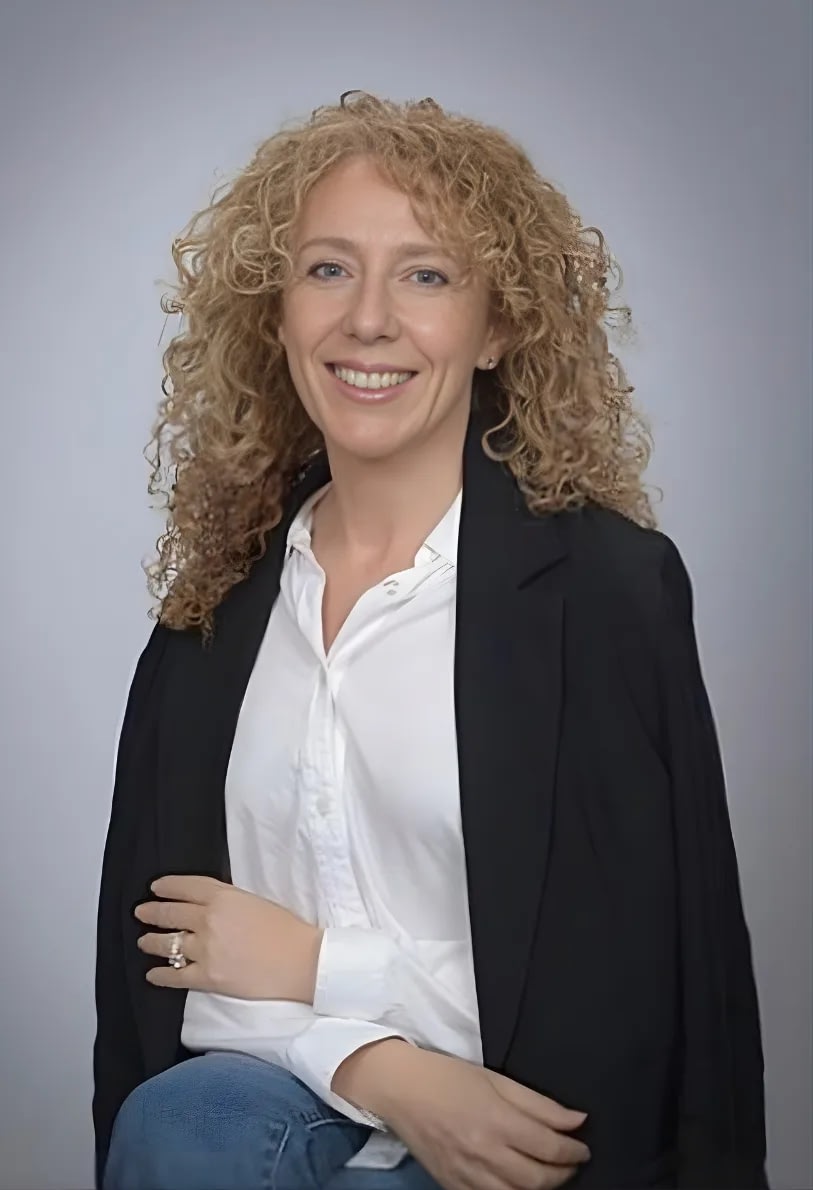
About the Author:
Couples Therapist in California
Marina Edelman is a Licensed Marriage and Family Therapist, relationship writer, and founder of TrueMe® Counseling, serving clients in Westlake Village, Thousand Oaks, and throughout California.
Drawing on more than 20 years of clinical experience, Marina writes practical, research-informed articles about couples therapy, affair recovery, trust, communication, attachment, anxiety, intimacy, and relationship repair. Her articles translate evidence-based therapeutic approaches into clear insights and actionable strategies readers can use to better understand their relationships.
Her writing is informed by:
- Gottman Method — Research-based tools for navigating conflict and strengthening friendship and intimacy
- Emotionally Focused Therapy (EFT) — Insights into attachment injuries, recurring relationship patterns, and emotional safety
- Attachment-Based Therapy — An understanding of how early relational experiences can shape adult relationships
- Cognitive Behavioral Therapy (CBT) — Strategies for identifying and changing thoughts and behaviors that contribute to disconnection
- AEDP — A compassionate approach to understanding and processing deeper emotional wounds
Through her articles, Marina helps readers recognize unhealthy patterns, understand the emotions beneath conflict, and identify practical next steps toward healing. Her content is especially relevant to couples and individuals navigating infidelity, broken trust, recurring arguments, emotional distance, anxiety, premarital concerns, or major relationship transitions.
Marina also provides in-person counseling in Westlake Village and Thousand Oaks and telehealth services throughout California.
Other Blogs You Might Like

The First Lie in an Affair Usually Isn’t Told to the Partner
An affair doesn’t always begin with a lie to a partner. Often, it begins with the stories someone tells themselves to make crossing a boundary feel acceptable.

I Just Found Out My Partner Is Cheating. What Do I Do Now?
Just discovered your partner is cheating? Before confronting them or making a major decision, learn what matters most during the first hours after discovery.

Blame Shifting: 5 Ways to Respond Instead of Defending Yourself
Does every argument end with you defending yourself? Learn 5 ways to respond to blame shifting without taking responsibility for someone else’s choices.
Take the first step toward healing and connection
Not sure where to start? Let’s talk.
