

You don't have to figure it out alone.
As a Marriage and Family Therapist with more than 20 years of experience, I help individuals, couples, and families strengthen relationships, heal from betrayal, and navigate anxiety, depression, trauma, parenting, divorce, and life transitions. Schedule a sessionInsecurity does something strange to people sometimes. It can make honesty feel like the harder option — like the truth is the thing that costs more. “It’s easier if I just don’t tell him.”
If a friend of mine said that to me, my first reaction wouldn’t be judgment. It’d be a question: when, exactly, did telling the truth to someone she loves get harder than just quietly hiding things that were completely innocent to begin with?
Maybe she went to lunch with a coworker and just doesn’t have it in her to answer the questions that’ll follow. Maybe an old friend texted out of nowhere. Maybe she stayed late at work for a totally boring reason. Maybe she just wants one night out with her own friends without having to account for every hour of it — where she was, who was there, exactly when she got home. Nothing happened. Nothing was wrong. But telling him still feels like more work than it should ever be.
I’ve watched this dynamic build slowly, over more than twenty years of sitting with couples. It rarely arrives all at once. It usually starts with one partner carrying some insecurity, and the other — often without even clocking that it’s happening — quietly rearranging their own behavior around not setting it off.
At first it looks like reassurance. A quick “just letting you know” text. An extra sentence of explanation that wasn’t really necessary. Harmless, on its own. Then it turns into accommodation — skipping things, softening things, pre-explaining things before anyone even asked. And somewhere down the line, the more secure partner starts editing pieces of their own perfectly ordinary life, just to keep the peace where it is, this is where insecurity creeps in.
That’s usually where I start paying real attention. Because you shouldn’t have to become a slightly less honest version of yourself just to make a relationship feel calmer.
Insecurity Isn’t Automatically a Relationship Problem
Insecurity is normal — that’s just part of being a person in a relationship you actually care about. You can love and trust your partner completely and still, every once in a while, feel a flicker of jealousy, or fear, or the sense of being left out, or that low hum of worry about losing them. Having the feeling isn’t the issue. The issue is what you ask your partner to do about it once it shows up.
There’s a real difference between “I know this is my own insecurity talking, but I’m feeling anxious right now — can we talk about it?” and “if you actually cared about me, you wouldn’t go.” The first one owns the feeling as yours. The second one hands it to your partner and asks them to manage it for you.
Over time, that difference is basically the whole thing. It’s what decides whether a relationship feels emotionally safe, or whether it slowly starts to feel like a smaller and smaller space to move around in.

1. You Start Editing What You Tell Them
This is often one of the first changes.
You stop mentioning the coworker who invited you to lunch.
You leave out that someone complimented you.
You don’t mention running into an ex at the grocery store.
Not because you’re hiding an affair.
Because you already know what will happen.
Twenty questions.
Suspicion.
An argument.
A cold evening.
Maybe accusations that take hours to resolve.
So you think:
“Why even bring it up?”
And that’s where insecurity can create exactly what the insecure partner fears: less openness.
The more difficult honesty becomes, the more tempting omission becomes, the less emotional safety.
2. Reassurance Turns Into Proof
Reassurance is normal in healthy relationships.
Sometimes we all need to hear:
“I love you.”
“We’re okay.”
“You don’t need to worry about that person.”
But reassurance has limits.
If reassurance never actually reassures, the requests can escalate.
“Who texted you?”
“Show me.”
“Why did you like their photo?”
“Why were you online but didn’t answer me?”
“Send me a picture so I know where you are.”
Now you’re no longer offering comfort.
You’re presenting evidence.
And the problem with constantly proving your innocence is that there is always another thing that can require proof.
Emotional safety begins to disappear when one person feels perpetually under investigation.
3. You Start Managing Their Emotions Before Making Your Own Decisions
I’ve seen people become incredibly skilled at predicting their partner’s reactions.
Before saying yes to dinner with friends, they’re already thinking:
“How am I going to explain this?”
Before wearing something they like:
“Will this start an argument?”
Before posting a photograph:
“Are they going to think I’m trying to get attention?”
Eventually, your partner’s potential reaction becomes part of almost every decision.
And sometimes you stop doing things you genuinely want to do because managing the aftermath feels like too much work.
That’s more than reassurance.
You’re beginning to organize your life around another person’s anxiety.
4. Normal Independence Starts Feeling Like Betrayal
Healthy relationships need both connection and individuality.
You can love your partner and still have friendships.
Interests.
Privacy.
Time alone.
Professional relationships.
Experiences that don’t involve them.
But insecurity can gradually turn ordinary independence into evidence that something is wrong.
A night with friends becomes:
“You’d rather be with them than me.”
Wanting space becomes:
“You’re pulling away.”
A private conversation becomes:
“What are you hiding?”
Over time, the other partner may begin making themselves smaller simply to prove they’re committed.
That’s not the same as closeness.
Real security allows two people to remain individuals while choosing each other.
5. You Start Walking on Eggshells
This is where emotional safety can really begin to deteriorate.
You find yourself monitoring:
Your words.
Your tone.
What stories you tell.
Which names you mention.
What you wear.
Who you follow.
How quickly you respond.
Maybe you haven’t technically been told you can’t do these things.
You simply know what happens if you do.
So you adapt.
The relationship may even look peaceful from the outside because you’re fighting less.
But sometimes there are fewer arguments because one person has learned how to avoid triggering them.
That’s not necessarily peace. It may be self-protection.
6. Eventually, You Stop Feeling Known
This is the irony of the whole pattern.
The insecure partner usually wants more closeness.
More reassurance.
More certainty.
More proof that the relationship is safe.
But when their reactions make honesty difficult, they may unintentionally create the opposite.
Their partner shares less.
Filters more.
Stops bringing things up.
Avoids difficult conversations.
And eventually, the insecure partner may say:
“I feel like you’re shutting me out.”
They may be right.
But the more useful question is:
When did openness start feeling unsafe?
You can’t create emotional intimacy by making someone afraid of what will happen when they’re honest.
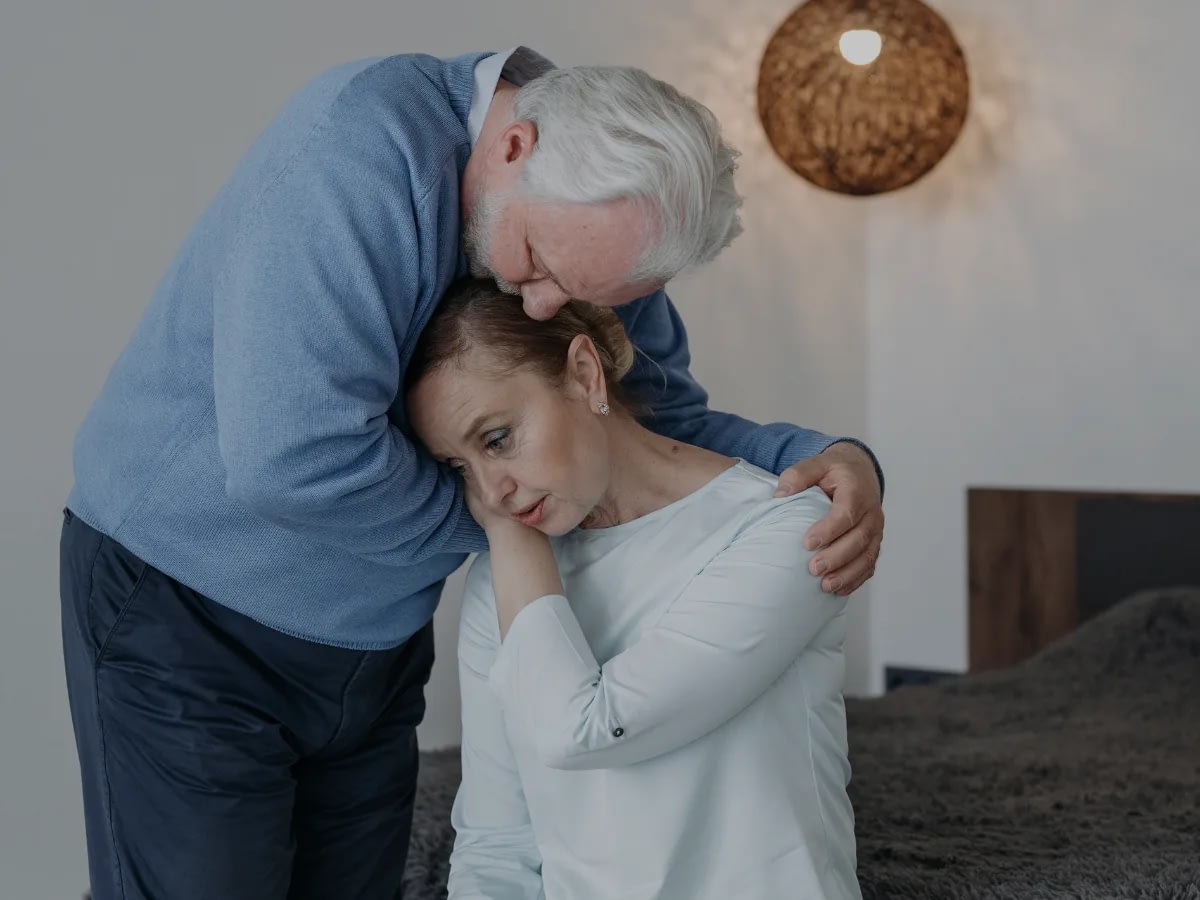
Supporting Your Partner Is Different From Regulating Them
If your partner struggles with insecurity, compassion matters — genuinely. Maybe they were betrayed before, in a past relationship or somewhere further back than that. Maybe abandonment is a particularly raw nerve for them. Maybe something earlier taught them that trust wasn’t safe to hand out easily. Understanding that history can help you respond with real empathy instead of frustration.
But empathy doesn’t mean you become responsible for eliminating every uncomfortable feeling they ever have. There’s a real difference between saying “I understand why this brings something up for you” and saying “I’ll just stop doing anything that makes you insecure.” The first one is support. The second one is a promise that, followed far enough, quietly starts shrinking your world.
When Does Insecurity Cross Into Controlling?
Not every jealous moment means something’s wrong — context and pattern matter here, not any single instance on its own. I start paying closer attention when insecurity repeatedly turns into demands: who you’re allowed to spend time with, what you’re allowed to wear, who you can talk to, where you’re allowed to go, access to your phone or accounts or private conversations, constant tracking of where you are, distance from friends or family, or some kind of punishment when you haven’t provided enough reassurance on demand.
At that point, we’re not really talking about someone who just needs a little extra reassurance sometimes. We’re looking at whether fear has quietly become the tool being used to restrict someone else’s freedom to just live their life.
What Healthy Insecurity Actually Sounds Like
This might sound like a contradiction, but insecurity, handled a certain way, can actually build intimacy instead of eroding it — as long as the person feeling it takes responsibility for it.
Something like: “I noticed I got jealous when you mentioned your coworker earlier. I know you haven’t done anything wrong. I think it stirred up something old for me, and I’d like to talk about it, if that’s okay.” That’s genuinely vulnerable. There’s no accusation buried in it, no interrogation, no demand that the other person go fix the feeling for them. What it actually communicates is: something’s happening inside me, and I feel the emotional safety to trust you enough to let you see it.
That’s a completely different thing from turning your own insecurity into a set of rules for your partner to follow.

I don’t expect couples to never feel insecure. That’s not realistic, and honestly, I’d be a little suspicious of any couple who claimed they never did. What actually matters is what happens after the feeling shows up.
Can you tell your partner you’re scared without it turning into an accusation aimed at them? Can your partner reassure you without quietly signing away their own independence to do it? Can you sit with a little uncertainty without needing hard proof to make it go away? And can the two of you actually talk about it — honestly, out loud — without one of you silently becoming the one responsible for managing the other’s feelings?
More than twenty years into this work, here’s roughly where I’ve landed: emotional safety was never about clearing every possible trigger for insecurity out of a relationship. That’s not achievable, and chasing it usually makes things worse, not better. The emotional safety is about whether both people can feel something hard without shrinking the other person down in order to feel okay again.
You can support your partner while they heal. You can reassure them. You can be transparent, dependable, someone worth trusting. What you can’t do — what was never actually yours to do — is regulate their emotions on their behalf. And you shouldn’t have to trade away a piece of your own honesty just to keep the relationship feeling calm on the surface.
Frequently Asked Questions
Can insecurity ruin a relationship?
Not by itself. The trouble usually starts when it repeatedly turns into accusations, monitoring, constant demands for reassurance, or restrictions that slowly chip away at trust.
Why does my partner’s insecurity make me want to hide things?
If something completely innocent keeps leading to interrogation or conflict, hiding it starts to feel like the path of least resistance. It’s not a healthy long-term fix, but that instinct is usually telling you honesty has stopped feeling safe.
How much reassurance should you actually give an insecure partner?
Reassurance is fine, even good, in reasonable amounts. It shouldn’t require you to keep proving your innocence, losing your emotional safety, or giving up your independence to provide it. Ideally your partner is also doing their own work to understand and manage the insecurity, not just collecting reassurance from you indefinitely.
What’s the real difference between insecurity and controlling behavior?
Insecurity is a feeling. Controlling behavior is action — trying to manage someone else’s choices, relationships, privacy, appearance, or freedom. You can absolutely feel insecure without ever crossing into controlling someone.
Can couples therapy actually help with jealousy and insecurity?
Yes, genuinely. It can help you find what’s actually triggering it, put fear into words without it landing as an accusation, build boundaries that hold, rebuild trust that’s taken a hit, and build real safety for both people — not just the one who’s anxious.
When Keeping the Peace Means Keeping Things to Yourself
If you’ve caught yourself thinking, “it’s easier if I just don’t tell them,” don’t brush that thought off. It doesn’t mean the relationship is doomed, or that something’s fundamentally broken between you. But it’s worth sitting with, honestly, why the truth started costing so much emotional safety in the first place.
As a Marriage and Family Therapist with more than twenty years in this chair, I help couples get underneath the patterns of jealousy, insecurity, trust issues, and emotional distance — and find a way back to each other that doesn’t require either of you to give up safety to get there.
A secure relationship was never the one where nobody feels insecure. It’s the one where insecurity can actually be spoken out loud, without quietly becoming a cage for the person on the other end of it.
Take the First Step
📞 Call: (818) 851-1293
📧 Email: marina@marinaedelman.com

About the Author:
Couples Therapist in California
Marina Edelman is a Licensed Marriage and Family Therapist and the founder of TrueMe® Counseling, a couples and relationship therapy practice serving clients in Westlake Village, Thousand Oaks, and throughout California.
Marina specializes in couples therapy, affair recovery, and relationship repair, drawing on a carefully integrated set of evidence-based approaches:
- Gottman Method — Research-based tools for reducing conflict and building friendship and intimacy
- Emotionally Focused Therapy (EFT) — Healing attachment injuries and rebuilding emotional safety
- Attachment-Based Therapy — Understanding how early relational patterns shape adult love
- Cognitive Behavioral Therapy (CBT) — Identifying and shifting the thought patterns that fuel disconnection
- AEDP — Processing deep emotional wounds with compassion and precision
Her counseling is best suited for couples and individuals seeking structured, research-backed support for relationship repair, affair recovery, anxiety, communication challenges, and premarital or marriage counseling — in person or via telehealth across California.
Other Blogs You Might Like

Who Helps Couples Create Boundaries With Friends, Bars, and Going Out After Infidelity?
Who helps couples set boundaries with friends, bars, coworkers, and nights out after infidelity? Learn how affair recovery therapy can help rebuild trust.

“Look What You Made Me Do”: When Your Partner Blame You for Their Choices
Does your partner blame you for their lying, yelling, or hurtful choices? Learn how blame shifting works and how to separate your part from theirs when they say, “Look what you made me do”
Couples Therapy vs. Marriage Counseling: Is There Actually a Difference?
Couples therapy or marriage counseling? Learn how they differ, who each is for, what happens in sessions, and how to choose the right relationship support.
As a Founder of TrueMe Counseling, Marina proudly works with the following therapists with additional specialties:
These therapists see clients in Culver City, and Westlake Village Office as well as virtually all throughout California.

Cheryl Baldi, LMFT
Individuals | Grief | Families | Trauma
Cheryl Baldi is a Licensed Marriage and Family Therapist with a Master's Degree in Clinical Psychology who works with individuals, couples, and families in a warm, empathetic, and collaborative environment.
Specializations: Anxiety, depression, grief, trauma, hopelessness, and family systems.
Best suited for: Individuals who feel stuck in unhealthy patterns and are looking for a compassionate, strengths-based therapist to help them build practical tools and reclaim a more peaceful life.

Dr. Rachel Chistyakov, PsyD, LMFT
Trauma | Kids & Teens | Families
Dr. Rachel Chistyakov brings both doctoral-level training in psychology and LMFT licensure to her work with couples, families, children, and individuals. Her practice centers on healing, connection, and emotional insight.
Specializations: Trauma, PTSD, anxiety, depression, family therapy, and specialized work with children and teenagers.
Best suited for: Individuals and families seeking a highly credentialed therapist with broad clinical range, including parents looking for specialized support for children and adolescents.

Chris Calandra, AMFT
Individuals | Men's Issues | Substance Abuse
Chris Calandra is an Associate Marriage and Family Therapist offering grounded, non-judgmental support to individuals and couples navigating anxiety, relationship tension, addiction, and feeling stuck.
Specializations: Anxiety, substance use and addiction, relationship issues, and men's mental health.
Best suited for: Individuals who want direct, down-to-earth support and are ready to do meaningful work. Particularly well-suited for men who may be approaching therapy for the first time.
Take the first step toward healing and connection
Not sure where to start? Let’s talk.
