by Marina Edelman, LMFT | May 29, 2020 | Blog, couples, marriage
Wouldn’t it be great if relationships came with an “easy button” like so many other things in our tech-heavy world? So many things run on autopilot these days: planes, phones, and even cars that can drive themselves!
In this world where many things work well with automation, it can be a good reminder that relationships retain a more old-fashioned quality. So often when relationships begin, things may seem perfect and effortless. This can feel amazing and we can get our hopes up and think that we have found soulmate perfection.
When the heady excitement wanes, it’s also easy to become disillusioned. You may think you have fallen out of love or (gasp) blame your partner for what you perceive as cracks in the relationship, leaving you wondering where things went wrong. Human relationships, not unlike our plants and pets, need nourishment and attention in order to create the conditions needed to thrive.
It can be easy to fall into a routine of the tried and true and lose sight of the fact that you must tend to your relationship. By adding some new behaviors and paying more attention to each other, your relationship can align more with what you and your partner both truly desire.
Here are a few practical tips that can reignite the flames, generate some new sparks, and keep your relationship alive and connected.
1. Learn each other’s love language. What makes you feel loved? It’s likely that your partner’s love needs are different than yours. It may be that neither of you are aware of this difference, leading to what feels like perpetual miscommunication. To figure out your love language, you and your partner can take this brief online quiz separately and then share your answers. The results may surprise you!
2. Reach out and … touch. We all need to be held. Infants have a basic need for loving contact to survive and this continues at every stage of life. Touching your partner often throughout the day — not just in the bedroom or when initiating sex — can increase intimacy in the bond between you. Family therapist Virginia Satir once said, “We need four hugs a day for survival. We need eight hugs a day for maintenance. And we need 12 hugs a day for growth.” Reach out for more growth and connection!
3. Take turns turning on the romance. Take turns planning date night at least once a month. Make your partner feel special by planning something for the two of you. This can be something elaborate like fine dining in a restaurant you both enjoy or having a picnic in the backyard with a blanket, mood music, and candles. Be creative and enjoy your time together.
4. Make frequent “love deposits.” We all have a love bank that keeps track of how we’re treated by others. Making deposits by treating your partner with love and respect keeps the account full. Making withdrawals with criticism and contempt can leave your account empty or even overdrawn. By keeping each other’s love bank full by making many more deposits than withdrawals, you can increase love and safety in your relationship. What is your love bank balance?
5. End Groundhog Day arguments. Do you have a particular topic that keeps leading to arguments? If so, try to finally get it resolved. Set aside a time to talk, agree on a maximum time limit (maybe 20 minutes if the topic isn’t too complex), and require that you both stay on the topic so progress can be made instead of escalating the conflict. One tip for increasing partnership for potentially triggering conversations is to sit side by side instead of across from each other. This small move can make the conversation feel less adversarial and promote partnership and intimacy.
6. Time out isn’t just for toddlers. Conflict is part of every healthy relationship. Become familiar with the pattern of conflict between you and your partner and agree to take a time out if things become heated or destructive. When you both calm down, come back to the topic, repair if needed, and if you still can’t see eye to eye, agree to disagree.
7. Keep it positive. There’s no need to bare it all in relationships by sharing every negative thought and reaction with your partner. No relationship or person is perfect. According to John Gottman, healthy relationships have a 5 to 1 ratio, with 5 being positive communication and 1 being the negative. According to Gottman’s extensive relationship research, it takes five good interactions to clean up the negative effects of one bad.
8. Learn the art of listening deeply. Drop your primitive lizard brain defenses so you can actually hear your partner. When you listen to your partner, are you actually listening or just planning your reply or way to prove them wrong? Our most important human need is to be heard and understood, and it’s hard to achieve that without a mutual awareness of this need.
9. Have fun together. Never underestimate the power of sharing fun and adventure together. With adult relationships and adult responsibility, it’s easy to lose the magic of childhood, where play was our work. This doesn’t have to end when we become grown-ups.
Reconnect to yourself and your partner through your inner child. Reflect on some things that light you up and that you love to do just for the fun of it. One way to add more fun to your life is to reflect on your childhood dreams. Share them with your partner and be open to experiencing things that they enjoy. Even if it’s not your cup of tea, be willing to share in the things that they enjoy in order to deepen your understanding and connection to one another. Those who play together stay together.
By Sharalee Hall, MA, AMFT. Sharalee is an associate at the office of Marina Edelman, LMFT. You can read more about her here.

by Marina Edelman, LMFT | May 26, 2020 | anxiety, Blog, couples, mindfulness
Staying mindful and present while living in quarantine has proven extremely difficult for most of us. With so much uncertainty in the air and vague estimations of when life can begin to resemble normalcy, it’s hard to stop ourselves from overthinking and giving in to anxiety-inducing thoughts.
These thoughts can interfere with your ability to be present in your daily life and in your relationship. Chances are, both you and your partner are feeling at least some anxiety and stress right now, either because of the current state of the world or how the quarantine is affecting your relationship. Mindfulness exercises are a great way to help reduce anxiety and stress.
Incorporating mindfulness exercises into your life is just one way to forge a stronger relationship as a couple. This can help you better weather life’s stresses and anxieties so that when stressful situations like quarantine pass, you’ll be more connected than ever.
Benefits of mindfulness in relationships
If you’re feeling anxious or fighting with your partner, it can be helpful to take some time to yourself to try the mindfulness techniques below and come back to your problem later. This can give you a chance to calm down and gain more clarity on the situation or help you focus on what actions you want to take.
You and your partner can even do mindfulness exercises together to bring you both a sense of calm during an anxious time. If you choose to do them together, be sure to put down your phones and step away from any distractions.
Whether you do it on your own or together, practicing mindfulness in your relationship can help you and your partner:
- Improve your mood so you feel calmer and happier
- Become better listeners and less distracted when having a conversation
- Have stronger emotion regulation, which means less anger and sadness
- Become more in tune with your feelings and your partner’s feelings
- Have more productive conversations and better problem solving
- Forge a deeper connection that leads to more intimacy
I’ve found that certain mindfulness techniques help me stay more present and grounded than others. These techniques can help you and your partner reduce your levels of anxiety so you can feel more calm, centered, and connected.
Five senses technique
One easy and simple mindfulness exercise that I partake in daily is the five senses technique, which I usually do every time I take my dog out for a walk. This technique uses your five senses — sight, touch, sound, smell, and taste — to help ground you and bring you into the present moment.
I usually go up to some flowers to do this technique, but any scene or area out in nature will work perfectly. If you’re doing this inside, it can be done in any room and in any area of your house.
Sight
I’ll start by noticing five things that I see in front of me. This can be the flowers themselves, their leaves, any blades of grass, or insects around the flowers.
Touch
Then I’ll touch four different things. I might gently run my finger across a flower petal or dig my hands in the grass, or I may give my dog a pet.
Sound
I’ll pay attention to three things that I can hear: the wind blowing through the trees, the sound of a lawn mower, or maybe a dog barking in the distance.
Smell
Then I’ll notice two things that I can smell, which could be the flowers themselves or the clean air.
Taste
Finally, I’ll focus on one thing I can taste. If I have a water bottle with me, then I’ll take a sip of water and mindfully pay attention to the feeling and sensation of the water going down my throat.
Grounding technique
Another quick mindfulness exercise that can be done anywhere and at any time is a grounding technique. While sitting on a surface, I notice all of the different areas of my body that are touching that surface and focus all of my attention to those areas. These areas are usually my back, thighs, and feet.
After I divert my attention to these areas for a few minutes, I then dig the bottoms of my feet into the ground so that I can really feel the earth beneath me. This is a quick way to (literally) ground yourself and bring you back into the present moment, especially if you’re feeling caught up in your thoughts or feeling some acute anxiety.
By Rachel Chistyakov, AMFT. Rachel is an associate at TrueMe Counseling Center. You can read more about her here.
by Marina Edelman, LMFT | May 19, 2020 | self-care
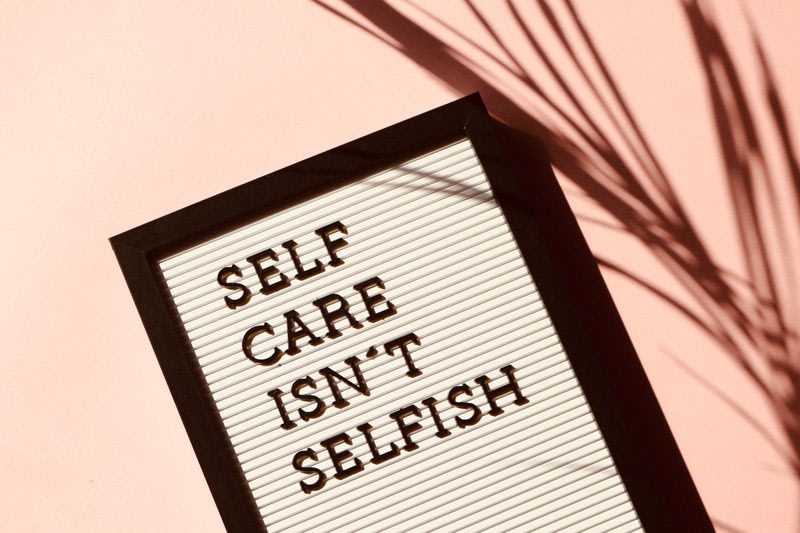
Self-care has become a popular buzzword amongst media outlets and therapists for a good reason. We must all focus and prioritize our emotional, physical, and spiritual needs to help support others and create the world we want to live in.
We cannot help others and ourselves when we pour from an empty cup. Self-care can be as simple as reducing screen time before bed to spending time with family. It can even be spending five more minutes paying attention to the sounds and sights of nature around you.
Here are just a few of the benefits of self-care.
Self-care makes you more productive
We live in a “go, go, go” society where rocket-speed work and no breaks are praised, and job applications seek “multitaskers.” The fact is that multitasking is actually proven to make us less productive. We accomplish more if we tackle one task at a time, focus, and slow down.
An example of slowing down can look like dividing tasks on a to-do list and taking planned breaks throughout the day.
It makes you more able to give to others
One big obstacle to self-care is the concept that it is selfish. That couldn’t be farther from the truth! When we focus on our emotional needs, we have more time, emotional bandwidth, and energy to give to those around us. This means more connected and fuller relationships.
It benefits your physical health
Chronic stress and overwork creates numerous physical health problems. Self-care can decrease stress levels and allow your body to relax and recharge. As we settle into a self-care routine, we experience stronger immune systems and less physical health ailments like sore muscles and colds.
It increases your capacity to handle stressors
When we are tired, emotionally drained, or sick, our capacity to handle even minor stressors drastically decreases. Self-care activities can improve your ability to handle and even master daily stressors, such as a flat tire or argument with a significant other. When a stressor occurs, the natural rhythm of the nervous system may be thrown off balance.
By practicing self-care, we give ourselves a better opportunity for our nervous systems to settle back into its natural rhythm more quickly. The resilience zone is the state of being where we feel able to handle life’s daily stressors effectively and efficiently. Self-care increases our capacity to handle stressors, or resilience.
Prioritizing self-care
Now, how do we begin to prioritize self-care? Begin by making a plan. Focus on exploring different areas of your life: personal, family, work, physical, spiritual, and relationships.
Choose a few activities within each of these categories to begin your self-care journey. They don’t have to be expensive or time-consuming. It may be challenging to wake up 20 minutes before your alarm to journal or meditate, for example, but it will absolutely be worth it.
Part of your self-care may even be regular individual therapy sessions to help you learn to focus on yourself and your own needs instead of prioritizing everyone else’s. Whatever activities work best for you are what you should incorporate into your self-care plan.
by Marina Edelman, LMFT | May 12, 2020 | coronavirus, friends
Whether your strongest friendships are local or long distance, the Covid-19 pandemic is changing how we connect with our friends. Sure, there are endless Zoom happy hours and socially distant porch hellos, but is that enough to maintain our friendships thriving long past the pandemic?
While apps like Facebook and What’s App are seeing more than 40% growth in use of their social platforms, it may not feel like your friendships are as fulfilling as usual. But there are ways to stay connected and keep your friendships thriving during social distancing. Here are just a few suggestions on how to maintain friendships while you’re apart.
Make a Point to Reach Out to Maintain Friendships
If you feel like you haven’t connected with your friends lately, it may simply be that you haven’t had a chance to reach out. Between working from home and teaching the kids, your days may be even busier than they were before.
Take a break from the craziness of the day and reach out to one or two friends. It can be a short text or an attempt at FaceTime while the kids are screaming in the background, but it’s a start. Just seeing your friend’s face on a screen or engaging with them via chat can help keep your connection alive.
Talk About Something Good
When you do reach out, it’s hard not to focus on the news of the day. But try to connect with your friends in the way you always did, whether that’s chatting about the latest TV show you’re binging on Netflix or your success with that sourdough starter you’ve been trying for years. Talking to friends about good things going on in your life or shared interests can both increase your mood and strengthen your connection so you don’t feel so distant.
Drop a Card in the Mail
Birthday parties, baby showers and anniversary celebrations may be on hold for now, but you can still show up for your friend during a time of celebration. Send a card or present in the mail to let your friend know you’re thinking of them. If you live close enough, you can even drop something off on their porch. Small gestures like that can go a long way toward making your friendships stronger in the long run.
Take Care of Yourself
One of the most important aspects of maintaining friendships is taking care of your own mental and physical health. When you’re healthy and happy, you’re more likely to want to reach out and engage with your friends. You’re also more likely to pick up the phone when someone calls and have a conversation.
Social distancing can feel socially isolating, but it doesn’t have to. If you’re finding it hard to connect with people during this time and feeling depressed or anxious, don’t be afraid to reach out. You can contact me anytime to make an appointment to talk through your feelings and feel connected again.
by Marina Edelman, LMFT | Apr 29, 2020 | affair, couples, marriage
How much is too much to share with family and friends about problems in your marriage?
When you first meet someone you run to your friends and family and tell them about this great human that just entered your life. You look forward to introducing them and then hold a debriefing session, feverishly taking in their opinions and observations. You hold onto their every word, ask them for advice on how to proceed in situation X, and analyze your new found loves actions with your mates. confiding in friends about problems in marriage
After several months your love’s imperfections start to surface. You have your first fight. You might even ‘take a break’ to figure things out. Friends and family are there by your side the entire time. They help you figure out what is a deal breaker or how to help your boyfriend/girlfriend see your view point – because if they saw it from your perspective of course they would succumb to your influence. The input of your inner circle is crucial at this stage of relationship.
In front of community at large you take your vows and commit to each other for life. After a couple of years the novelty of married life has worn off and real problems and grid lock situations emerge. So what do you do? You go back to what worked to begin with, you start seeking counsel of your inner circle that helped you at the onset of your relationship.
Traditional marriage is designed to be exclusive – a unique dyad that provides a safe confidential place for each spouses heart to live. When a third party is consistently brought into the relationship, safety and sanctity of the relationship gets disturbed. It is almost impossible for your tribe to offer unbiased advice. After all they are loyal and committed to you and therefore see you through rose colored glasses. The chances a Mother will tell her daughter how unreasonable she is, are pretty low.
Yet we are social beings and need to process situations and feelings out loud. So what is one to do. One obvious answer is to find a couples counselor who can help you both find solutions to unresolved issues or guide your communication to a cleaner and healthier path. But we still want to open up to people we love and pour our hearts out to those that care about us. For the record I strongly advise against airing dirty laundry in public. Confiding to your support system sounds like a good idea at the time but can drive a wedge between your spouse and you. They might feel betrayed and ambushed. Feelings of shame can surface prior to family gatherings which would effect your spouses desire to socialize. Please take all of this into consideration prior to opening up.
In 2014 research (1) by Kirsten Lind Seal for University of Minnesota showed that 73.3% of U.S. adults reported ever having been a confidant to someone with a couple relationship problem, while 62.6% had themselves confided in someone about a relationship problem. “Women were more likely to be confidants than men, as were individuals with more education. The most common confiding relationship was between friends, followed by siblings. Confidants had a wide range of marital problems brought them, including common issues such as disagreements over money along with serious issues such as infidelity and divorce.” So now that we established we shouldn’t confide in others about our marital distress, but majority of us do, how to do it without ruining our marriage.
Best Practices of Confiding
- Set your intention in receiving help and guidance
- Find a confidant that is non-judgmental, supportive listener and offers alternative perspective
- Avoid spouse bashing
- Brainstorm solutions not just regurgitate the problem
- Tell your spouse ahead of time that this is happening to avoid an unpleasant surprise
- Share the gist of what is upsetting not the dirty details
- Limit sharing to one person
Prioritize your marriage by dealing with your problems together. If you’ve already confided about your partner to others, don’t despair it’s not too late to make things better. Consider circling back to your confidant and mention some of the things you appreciate about your partner. At times we may feel hopeless that things can get better. As a marriage and family therapist for 15 years I can tell you that I have seen couples make huge turnarounds by putting effort and time into their love. It takes commitment to see how each of you contribute to the relationship from a negative and positive position.
Marina Edelman is a Licensed Psychotherapist in private practice for 15 years. She has helped countless couples design fulfilling beautiful relationships using Gottman Method along with Emotional Focused Therapy to create long lasting results. She has been published in Huffington Post and most recently quoted in The Lily (subsidiary of Washington Post).
(1) https://conservancy.umn.edu/server/api/core/bitstreams/2549759c-7e49-4e35-abba-8dab90497eca/content
by Marina Edelman, LMFT | Apr 3, 2020 | Blog, couples, marriage
Sitcoms lead us to believe that women pretend to have headaches to avoid sex. But more and more often I encounter couples where the man is either not interested or is unable to perform sexually.
Whether it’s you or your spouse who doesn’t want to initiate sex, falling into the trap of a sexless marriage is dangerous. It can lead to depression, unhappiness in your marriage, and both physical and emotional affairs. About 15-20% of people are in a sexless marriage — and sometimes they don’t even know why.
It’s easy to blame busy schedules and lack of time, but you can always schedule in time to be intimate. So what is leading to all these platonic marriages? And how do you bring passion back?
What leads to a sexless marriage?
Between work and kids and life, it’s easy to come up with excuses for not wanting to be intimate with your spouse. But the longer it continues, the harder it can be to reconnect and feel passionate again.
The quicker you can determine what’s causing your lack of intimacy, the faster you can work on fixing the problem.
Medical problems
Medical problems are a good place to start when it comes to determining why you or your partner have zero libido. Often hormone deficiencies like low testosterone can lower your sex drive.
Loss of libido is also linked to conditions like depression, high blood pressure, and diabetes. Certain medications, including antidepressants, can cause you to lose interest in sex.
Stress
Stress makes you feel sluggish, which in turn affects your metabolism and weight and inadvertently leads to poor body image. Stress also affects your body by overproducing a hormone called cortisol that directly reduces your libido.
Emotional disconnection
People often think that a loss of interest in sex means their partner is no longer physically attracted to them. But reduced attraction usually has less to do with appearance and more to do with unexpressed and unresolved unhappiness in the relationship or marriage. When you feel emotionally detached from your partner, it’s hard to want to be physically intimate.
Lack of romance
This can go hand-in-hand with emotional disconnection. A lack of romance often leads to a lack of intimacy. If you think back to when your relationship first started, there were probably a lot of romantic gestures that made you feel close to and engaged by your partner. When these go away, it can be harder to feel the excitement and connection that lead to sex.
Poor communication
Unless you talk to your partner about how their lack of interest affects you, they may have no idea. Failing to communicate your needs and desires can directly impact how often you have sex.
Fixing a sexless marriage
Maybe you haven’t had sex with your spouse for months, or even years. Once you get into the routine of not having sex, it can seem impossible to fix. But you can find your way back to each other and reignite connection and passion in your relationship.
The first thing to do is talk. Talk about your sexual needs and how they aren’t being fulfilled. Just the act of talking alone can lead to the closeness and connection that may have been missing.
Learn to reduce your stress. Stress management is an important step in bringing intimacy back into your relationship. When you can let go of some of those things that bring you the most stress, you leave yourself more open to spend time with your partner and be relaxed.
Check in with your doctor. Get a check up at the doctor to rule out underlying medical conditions or have your meds changed. Once medical problems are ruled out, then issues such as stress, mood, and marital satisfaction can be addressed.
Get counseling. Talking through issues of intimacy may be hard for you or your partner for many reasons. Connecting with a couples therapist can help you learn to talk about the issues that have led to your sexless marriage and help you find ways to be intimate again. Tools like Gottman’s online marriage assessment can help me quickly hone in on issues in your marriage. Together, we can work on addressing those issues so you feel closer again.
Bring back the romance. Romance doesn’t have to be grand gestures or long weekends away. Those may not even be possible if you have a demanding job and kids. Romance could be laughing with your partner for a few minutes every night, picking up your spouse’s favorite food for dinner, or spending time on the patio listening to your favorite songs.
Change the emphasis. Men’s sexuality is often defined by society and themselves as the ability to perform on demand. If they can’t achieve an erection or climax, men often develop performance anxiety and become withdrawn, angry, or suppress sexual desires. Women often need more emotional connection when it comes to sex and may feel even more detached and self-conscious if they can’t get aroused as quickly as they once did.
Removing the emphasis from intercourse and refocusing on things like cuddling, foreplay, and flirting reduces the pressure and allows you to redefine your sexuality in a different context. By replacing intercourse with physical and emotional intimacy, a couple can actually reinvigorate their sex life and bring romance back into their marriage.
Don’t despair. If you’re with a compassionate, loving partner your sexless marriage can be transformed to a hot one in no time!
by Marina Edelman, LMFT | Mar 17, 2020 | anxiety, coronavirus
What I Am Telling My Clients Who Are Anxious About Coronavirus
The word ‘unprecedented’ has been used and maybe over used but the Coronavirus is undeniably affecting all of us in significant ways. Social distancing has drastically affected our daily lives. This pandemic has had a toll not only on our physical and social life but on our mental health as well. You are probably familiar with statistics such as number of people infected, recovery rate, or countries impacted. Here are some other statistics to consider: in one study of Wang et al, 2020 they found that in China, 53.8% of the respondents to a survey rated their psychological impact as moderate-to-severe and 28.8% had moderate to severe anxiety, 16.5% had moderate to severe depressive symptoms, 8.1% had moderate to severe stress levels.
Know that you are not alone, my associates and I are here to help you. We are meeting with clients using video portals and phones and are finding these tools to be very affective. Please feel free to reach out for help. In the meantime here are some ways you can stay healthy and happy.
Be creative in connecting with friends and family
Physical distancing doesn’t have to be synonymous with social distancing. On the contrary, we have amazing tools at our disposal to connect with people. Here are example of three ways to stay connected.
- Google just announced that they are giving away premium feature of Hangout Meet for free. This allows you to connect with up to 250 people. Zoom, FaceTime, Facebook etc. are all great ways to connect one on one or with a group.
- Netflix has a cool feature where you can still watch a movie together and have a group chat with the Chrome extension Netflix Party. It enables you to remotely watch, synchronize the movie and chat.
- Consider throwing a remote dinner party by planning a menu together and deciding on a time. Plant your laptop on the counter and start a video conference while prepping your meal. Bon Appetite!
Self-Care to manage anxiety and depression
If you have been procrastinating focusing on your health and wellness than this is your moment. Mental health, immune system and physical health will benefit with increased attention to self care. This is a great opportunity to create healthy habits.
- Group fitness classes are great not just for the workout but because they give us a sense of community. Your gym or studio maybe closed but you can replace that with some wonderful free at home options and digital classes streaming right into your home. Staying active can help alleviate stress as well as distract you in a positive way. Here are some options:
305 Fitness: Stream full classes for free on its YouTube channel at 12 p.m. ET.
AKT: Stream free classes on Facebook Live, check its social for updated schedules.
Modo Yoga: Stream free daily yoga classes on Instagram Live.
- Meditation is something all of us want to do but can’t seem to find the time to do it. Well now there are no excuses. There are tons of guided meditation videos and apps out there. Find a quiet place to sit for even 10 minutes and just focus on your breath. Be kind with invasive thoughts. Watch them float away as you refocus on your breath.
- Eat healthy at home. Restaurants and coffee shops might be closed but a healthy meal is at your fingertips. Recent research has proven that we can help manage our mood with a healthy diet. Foods such as salmon, yogurt and dark chocolate have brain boosting properties that alleviate some symptoms. Replacing coffee with green tea or chamomile tea is also a good way to add calmness to your morning.
Maintain a similar routine or establish a new one if one didn’t exist
Being flexible and accepting change is crucial during this unprecedented time. Try to stick to your normal routine as much as possible. If you have to make adjustments because of social distancing at least keep doing it in the same order or time. For example even though you don’t have a commute, still wake up at the same time and enjoy a leisurely breakfast. If you are used to meeting up with friends after work, consider calling them while taking a walk outside.
If a routine was never your thing, consider creating a loose one such as consistent sleep schedule, work out, prepare a meal, virtually visit with a friend….
Reduce social media consumption of coronavirus
This is a big one! Reading about what is happening around the world is healthy to a point. There is a fine line with obsessing over pandemic as opposed to staying informed. Social media also allows us a peek into other people’s lives and we can’t help but to compare them to us. Recently parents have been posting schedules for homeschooling their children. The images are so cute and organized and colorful. But what if you are struggling with figuring it all out or are just not that excited about homeschooling, this can leave you feeling disappointed and a bit sad. Be cautious with how much time you spend on media in general. Subscribe to happy or good news channels as well.
Focus on what you can do vs what you cannot
You will now probably have more time on your hands and common sources of entertainment will not be available. There are so many options still at your disposal, just think outside the box. All of us have some home projects that we say we will get too but can’t find the time to actually complete. Or was your New Year resolution to write a book, read more, or spend time outdoors. Spending time outside is a great way to elevate your mood, feel a sense of freedom, and get some steps in.
Show up as your best self by channeling
- Patience
- Gratitude
- Compliments
- Understanding
- Humor
- Empathy
We are all in this together, maintaining an optimistic outlook and focusing on what is possible will help you to be resilient and creative. Feel free to reach out by visiting truemecounseling.com or calling 818.851.1293.