

You don't have to figure it out alone.
As a Marriage and Family Therapist with more than 20 years of experience, I help individuals, couples, and families strengthen relationships, heal from betrayal, and navigate anxiety, depression, trauma, parenting, divorce, and life transitions.
You can love someone deeply and still not feel safe telling them what you’re really thinking.
I see this more often than people might expect.
A couple comes into my office because they’ve “lost their connection.” They still love each other. They may have built a life together, raised children, shared decades of memories, and genuinely want the relationship to work.
But somewhere along the way, they stopped letting each other in.
One partner says:
“We never talk anymore.”
And the other says:
“Every time I try to talk, it turns into an argument.”
After more than 20 years as a couples therapist, I’ve learned that when people say they want more emotional intimacy, sometimes intimacy isn’t actually where we need to start.
First, I want to know:
Does it feel emotionally safe to be vulnerable with your partner?
Because emotional intimacy and emotional safety are closely connected, but they’re not the same thing.
Emotional safety allows you to lower your guard. Emotional intimacy is what becomes possible when you do.
What Is Emotional Safety in a Relationship?
When I talk about emotional safety with couples, I’m not talking about never disagreeing.
In fact, emotionally safe couples can disagree quite a lot.
The difference is that disagreement doesn’t threaten the relationship.
You can say:
“That hurt me.”
“I don’t agree.”
“I need something different.”
“I made a mistake.”
“I’m scared.”
And you don’t immediately expect ridicule, punishment, contempt, or rejection in return.
You trust that your partner may not love what you’re saying, but they’ll still make an effort to understand it.
That’s emotional safety.
And without it, people naturally start protecting themselves.
What Is Emotional Intimacy?
Emotional intimacy is different.
It’s the experience of allowing another person to really know you.
Not simply what happened during your day.
But what it meant to you.
What scared you.
What you’re embarrassed about.
What you need.
What you’re afraid to ask for.
There’s a big difference between saying:
“Work was awful today.”
and:
“I’m terrified I’m not good enough at my job, and I haven’t wanted to tell you because I’m embarrassed.”
That’s intimacy.
The second statement gives your partner access to something much more vulnerable.
But most people won’t keep offering that kind of vulnerability if experience has taught them it isn’t safe.

5 Differences Between Emotional Intimacy and Emotional Safety
1. Safety Says, “I Could Tell You.” Intimacy Says, “I Want You to Know.”
This is probably the simplest way I’ve found to explain the difference. Safety means you believe you could tell your partner something difficult, if you needed to. Intimacy is what happens when you actually choose to.
And every time that vulnerability gets met with curiosity, empathy, and care instead of the opposite, the relationship gets a little safer for the next conversation like it. That’s really how intimacy grows — not through one enormous heart-to-heart that fixes everything, but through hundreds of smaller moments where someone takes a small emotional risk and finds out, you’re still here.
2. Safety Is About Trust. Intimacy Is About Connection.
I sometimes watch couples work really hard to manufacture closeness — scheduling date nights, asking each other deeper questions off a list, planning trips, carving out more time together. Those things genuinely help. I’m not knocking any of it.
But if one person is still privately thinking, I need to be careful what I say or they’ll get defensive, then none of that scheduling is touching the actual foundation. You can’t plan your way around emotional unsafety — it doesn’t work like that. Before deeper connection has room to grow, both people need to trust, on some level, that honesty won’t automatically turn into another fight.
3. Safety Shows Up in Conflict. Intimacy Shows Up in Vulnerability.
If you want to gauge how emotionally safe a relationship actually is, don’t just look at the good days. Watch what happens in the middle of a disagreement.
Can your partner tell you that you hurt them without you jumping straight to explaining why they’re wrong? Can you hear “no” without your whole body treating it like a rejection? Can either of you admit a mistake without it turning into humiliation? Can you disagree and still, somehow, remember you’re on the same side?
Those moments tell me far more about a couple’s emotional safety than how affectionate they are when everything’s already going well.
4. You Can Have Safety Before You Have Real Intimacy
Say you’ve just started dating someone. They listen. They respect your boundaries without you having to fight for them. They don’t push. They stay calm when you disagree about something.
You might already feel pretty safe with them — and that’s real, that counts for something. But they don’t actually know you yet. That part just takes time, no way around it.
Intimacy builds as a couple accumulates a history together. You share something a little vulnerable. They handle it with care. They share something back. You stay present for it instead of flinching. Eventually enough of that stacks up that the relationship starts to carry its own quiet evidence: it’s okay to be known here.
5. Being Known Without Feeling Safe Can Be Its Own Kind of Lonely
This is one of the harder patterns I see in my office. Your partner might know everything about you — your childhood, your insecurities, the wounds from your family, the stuff you’re ashamed of and rarely say out loud.
But what happens to all of that once you’re actually fighting? If something you shared vulnerably on a quiet Sunday gets thrown back at you as ammunition during an argument on Thursday, you’re probably going to think twice before opening up like that again. Honestly, you should.
Vulnerability needs to be handled with care to mean anything. Someone knowing your sensitive places isn’t the same thing as intimacy if you can’t actually trust them to protect those places once things get hard.
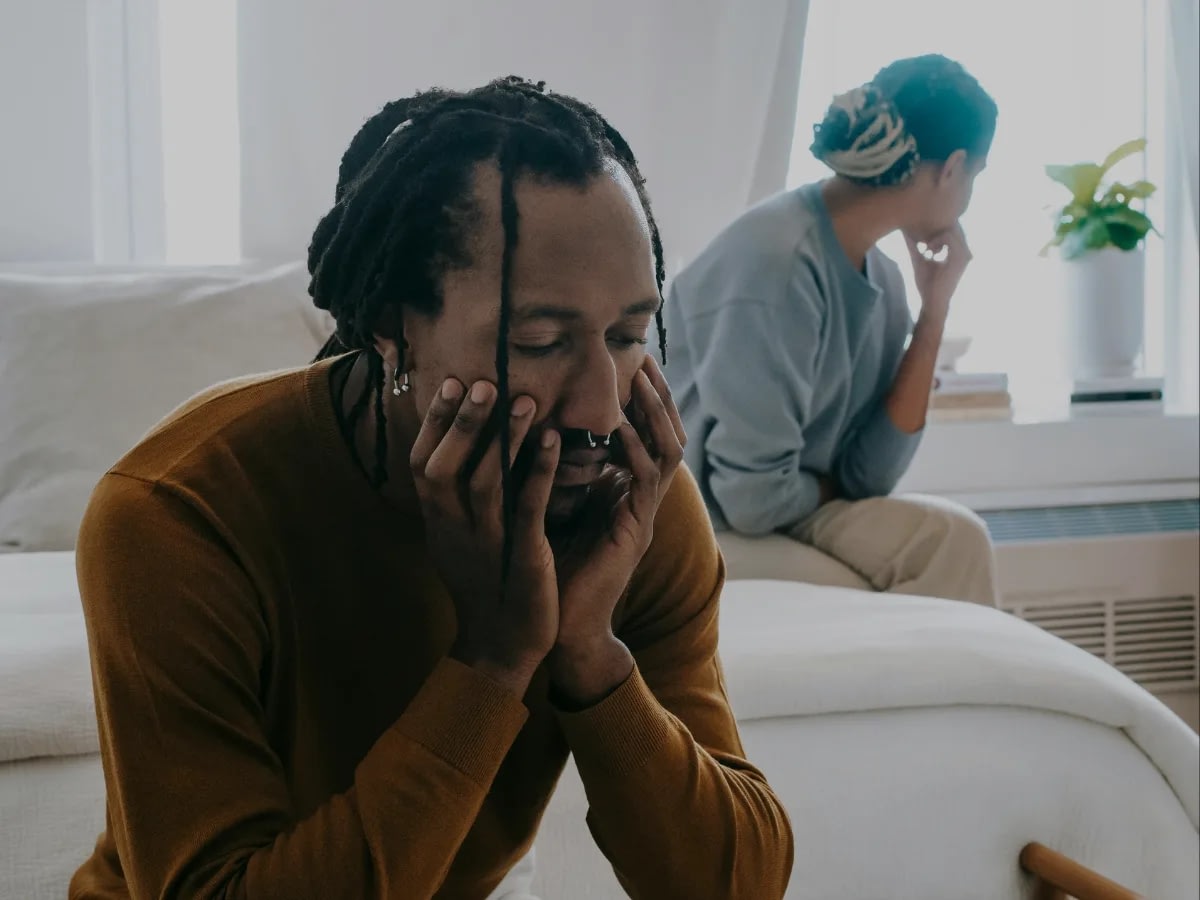
Why Couples Stop Opening Up to Each Other
People rarely wake up one morning and decide:
“I’m never going to be emotionally vulnerable with my spouse again.”
It happens much more quietly.
You share something and feel dismissed.
So next time, you share a little less.
You bring up a problem and your partner becomes defensive.
So you decide it isn’t worth bringing up again.
You express a need and get called demanding.
You disagree and get mocked.
Eventually, you stop taking the risk.
Then months or years later, one person says:
“I feel like I don’t know you anymore.”
And the other thinks:
“I stopped showing you because it didn’t feel safe.”
That’s why emotional distance isn’t always a sign that love disappeared.
Sometimes protection replaced vulnerability.
How Do You Rebuild Emotional Safety?
I usually tell couples not to start with some huge emotional conversation.
Start smaller.
Listen without immediately preparing your defense.
If your partner tells you something hurt, resist the urge to explain why they shouldn’t be hurt.
Don’t use private vulnerabilities as ammunition later.
Take responsibility when you’ve caused harm.
Respect a boundary even when you’re disappointed by it.
And perhaps most importantly, learn how to repair.
You will misunderstand each other.
You will say things badly.
You will occasionally become defensive.
Healthy couples aren’t perfect at communication.
They become better at coming back afterward and saying:
“That didn’t go the way I wanted it to. Can we try again?”
That sentence can do more for emotional safety than people realize.
Can You Have Emotional Intimacy Without Emotional Safety?
You can have moments that look intimate.
You can share secrets.
Have intense conversations.
Know each other’s deepest fears.
But sustainable intimacy becomes very difficult without emotional safety.
If vulnerability repeatedly leads to criticism, dismissal, betrayal, or punishment, most people eventually adapt.
They stop sharing.
Stop asking.
Stop expecting.
And sometimes their partner interprets that withdrawal as:
“You don’t love me anymore.”
When what may actually be happening is:
“I don’t feel safe enough to keep showing you this part of me.”
That’s a very different problem.
And it requires a very different conversation.

Final Thoughts
When couples tell me they don’t feel close anymore, I don’t jump straight to asking them to become more intimate with each other. What I actually want to know is what happens when they try.
What happens when one person admits they’re scared? What happens the moment someone says, “you hurt me”? What happens when one partner needs something the other doesn’t quite understand yet? Do they get curiosity in return, or defensiveness? Compassion, or contempt? Or does it just go quiet?
The answers to those questions usually tell me exactly where the real work needs to start.
Emotional intimacy doesn’t come from forcing yourself to share more, even though that’s often where people think the fix lives. It grows when vulnerability gets met, over and over, with enough care that sharing starts to feel safe again. Safety is what opens the door. Intimacy is what happens once two people actually trust each other enough to walk through it together.
Frequently Asked Questions
What’s the difference between emotional intimacy and emotional safety?
Emotional safety is feeling able to express your thoughts, needs, boundaries, and feelings without bracing for ridicule, punishment, or rejection. Emotional intimacy is the deeper connection that grows once partners feel safe enough to actually share the more vulnerable parts of themselves.
Can you love someone and still not feel emotionally safe with them?
Yes, and it’s more common than people expect. Love doesn’t automatically create safety. You can care about someone deeply and still feel guarded — because of criticism, defensiveness, broken trust, conflict that keeps repeating, or just history that’s built up over time within the relationship itself.
What does emotional safety actually look like day to day?
Being able to disagree without it turning into a threat. Admitting a mistake without spiraling into shame. Setting a boundary. Naming a hard emotion out loud. Asking for what you need. And trusting that whatever you share won’t quietly get used against you somewhere down the line.
Why have I stopped opening up to my partner?
Often it’s a slow response to feeling dismissed, criticized, misunderstood, or unheard one too many times. Pulling back becomes a kind of self-protection once vulnerability has stopped feeling safe — it’s not usually a sudden decision, more something that happens gradually until you notice it’s already happened.
Can couples actually rebuild emotional intimacy once it’s gone?
Yes, genuinely. It tends to come back when both people are willing to work on emotional safety directly — communicating differently, repairing what’s gone unresolved, and meeting vulnerability with more care and curiosity than before.
When You Love Each Other but Don’t Feel Close Anymore
Sometimes love isn’t actually what’s missing. Safety is.
If you’ve noticed yourself opening up less, steering around certain conversations, or feeling more guarded around your partner than you used to, it’s worth figuring out what changed — before the distance quietly becomes the new normal you both just live inside.
As a Marriage and Family Therapist with more than twenty years of experience, I help couples find the pattern underneath the disconnection and build healthier ways to communicate, repair, and find their way back to each other.
You don’t have to wait until you’re standing at the edge of separation to work on this. Sometimes the most important place to start is just building enough safety to tell each other the truth again.
Take the First Step
📞 Call: (818) 851-1293
📧 Email: marina@marinaedelman.com

About the Author:
Couples Therapist in California
Marina Edelman is a Licensed Marriage and Family Therapist and the founder of TrueMe® Counseling, a couples and relationship therapy practice serving clients in Westlake Village, Thousand Oaks, and throughout California.
Marina specializes in couples therapy, affair recovery, and relationship repair, drawing on a carefully integrated set of evidence-based approaches:
- Gottman Method — Research-based tools for reducing conflict and building friendship and intimacy
- Emotionally Focused Therapy (EFT) — Healing attachment injuries and rebuilding emotional safety
- Attachment-Based Therapy — Understanding how early relational patterns shape adult love
- Cognitive Behavioral Therapy (CBT) — Identifying and shifting the thought patterns that fuel disconnection
- AEDP — Processing deep emotional wounds with compassion and precision
Her counseling is best suited for couples and individuals seeking structured, research-backed support for relationship repair, affair recovery, anxiety, communication challenges, and premarital or marriage counseling — in person or via telehealth across California.
Other Blogs You Might Like

Who Helps Couples Create Boundaries With Friends, Bars, and Going Out After Infidelity?
Who helps couples set boundaries with friends, bars, coworkers, and nights out after infidelity? Learn how affair recovery therapy can help rebuild trust.

“Look What You Made Me Do”: When Your Partner Blame You for Their Choices
Does your partner blame you for their lying, yelling, or hurtful choices? Learn how blame shifting works and how to separate your part from theirs when they say, “Look what you made me do”
Couples Therapy vs. Marriage Counseling: Is There Actually a Difference?
Couples therapy or marriage counseling? Learn how they differ, who each is for, what happens in sessions, and how to choose the right relationship support.
As a Founder of TrueMe Counseling, Marina proudly works with the following therapists with additional specialties:
These therapists see clients in Culver City, and Westlake Village Office as well as virtually all throughout California.

Cheryl Baldi, LMFT
Individuals | Grief | Families | Trauma
Cheryl Baldi is a Licensed Marriage and Family Therapist with a Master's Degree in Clinical Psychology who works with individuals, couples, and families in a warm, empathetic, and collaborative environment.
Specializations: Anxiety, depression, grief, trauma, hopelessness, and family systems.
Best suited for: Individuals who feel stuck in unhealthy patterns and are looking for a compassionate, strengths-based therapist to help them build practical tools and reclaim a more peaceful life.

Dr. Rachel Chistyakov, PsyD, LMFT
Trauma | Kids & Teens | Families
Dr. Rachel Chistyakov brings both doctoral-level training in psychology and LMFT licensure to her work with couples, families, children, and individuals. Her practice centers on healing, connection, and emotional insight.
Specializations: Trauma, PTSD, anxiety, depression, family therapy, and specialized work with children and teenagers.
Best suited for: Individuals and families seeking a highly credentialed therapist with broad clinical range, including parents looking for specialized support for children and adolescents.

Chris Calandra, AMFT
Individuals | Men's Issues | Substance Abuse
Chris Calandra is an Associate Marriage and Family Therapist offering grounded, non-judgmental support to individuals and couples navigating anxiety, relationship tension, addiction, and feeling stuck.
Specializations: Anxiety, substance use and addiction, relationship issues, and men's mental health.
Best suited for: Individuals who want direct, down-to-earth support and are ready to do meaningful work. Particularly well-suited for men who may be approaching therapy for the first time.
Take the first step toward healing and connection
Not sure where to start? Let’s talk.
